IT Factory
2026 · Private tool
My control centre for small web projects on Cloudflare. It creates a new project in about a minute, with deploys, monitoring, security and privacy in place from the start, and everything in it can also be done by an AI agent.
A new project in a minute
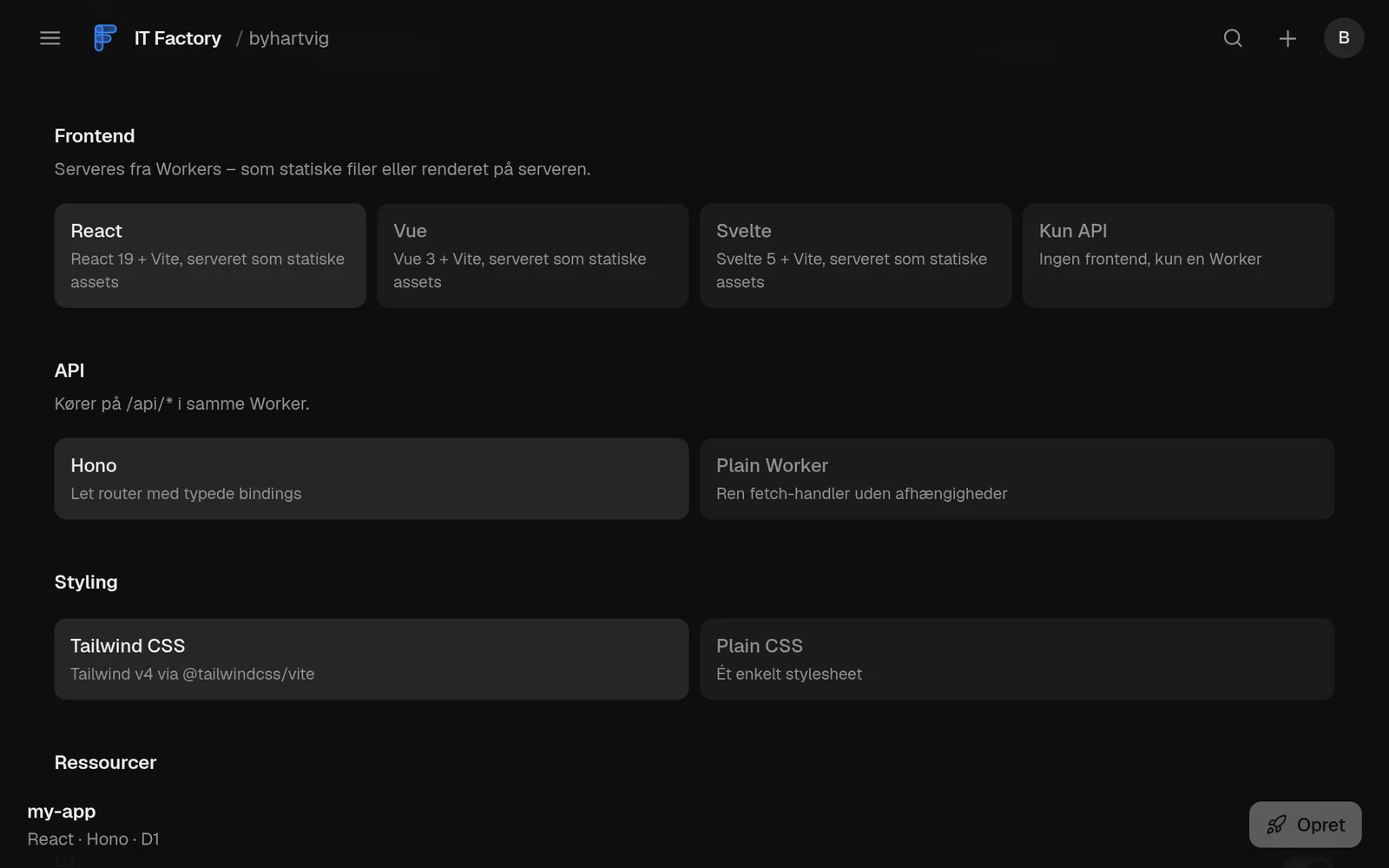
I pick a name and a stack: React, Vue, Svelte or API only, Hono or a plain Worker, Tailwind or plain CSS, and the Cloudflare resources the project needs, such as a database, key-value storage, file storage or queues. Every generated file is shown before anything is created.
Then IT Factory creates the resources on Cloudflare, writes their real IDs into the configuration, creates the GitHub repository and pushes the project. Progress streams into the page step by step, and the first deploy follows from there.
What every project starts with
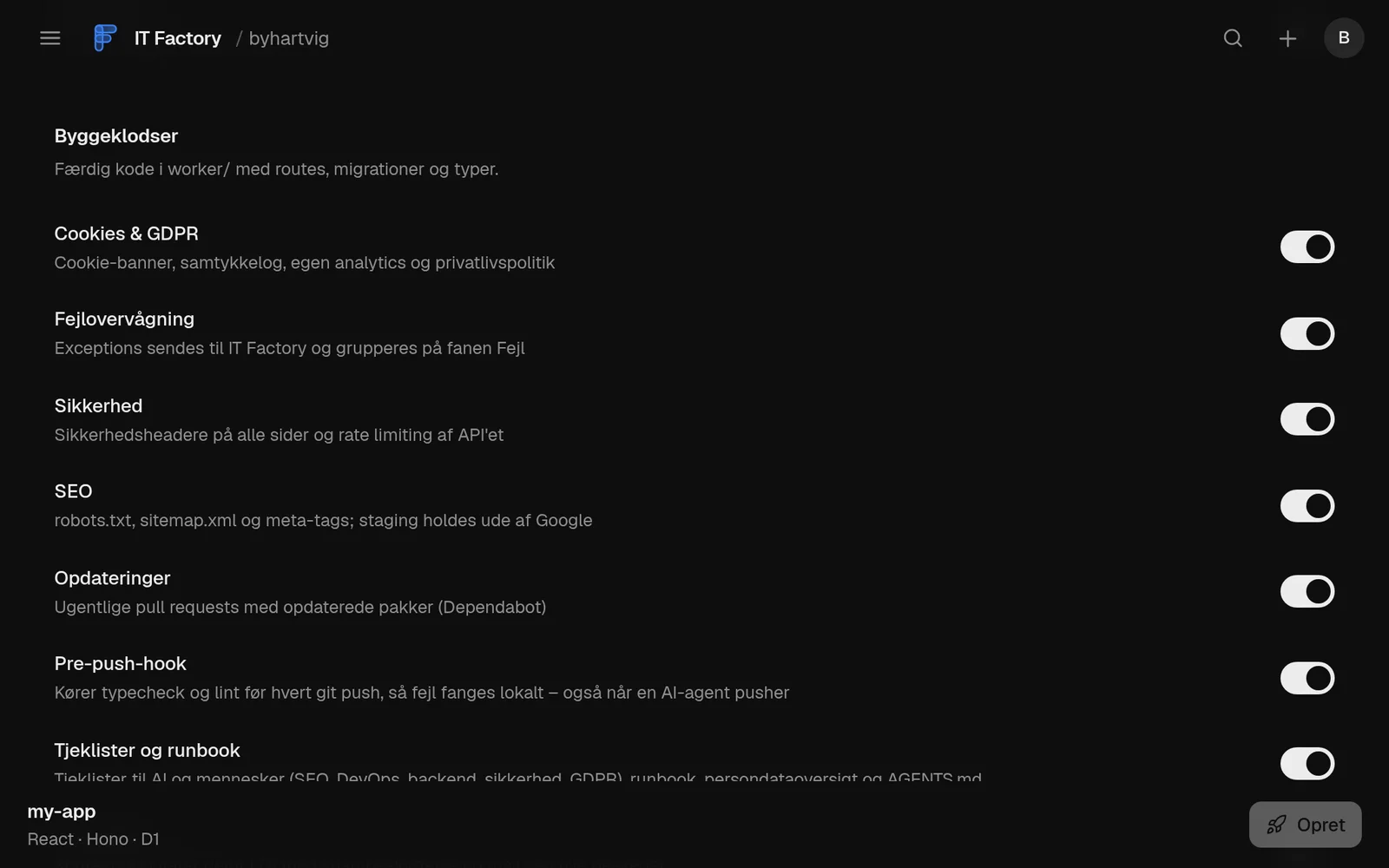
The parts I used to forget are switched on by default: a cookie banner with a consent log and cookieless analytics, error monitoring, security headers and rate limiting, the files search engines expect, weekly dependency updates, and a hook that runs type checks and lint before every push, so mistakes are caught locally even when an agent is the one pushing.
Larger pieces can be added as building blocks with their routes, migrations and types already written: login, Stripe payments, email and vector search.
Running them
Each project gets its own page with its deployments and one-click rollback, live logs, analytics, a browser for its database, its secrets, scheduled jobs and domains.
In the background IT Factory checks every project's health every five minutes, groups errors so the same one is only reported once, backs up each database every night and keeps the backups for 30 days, and runs Lighthouse every week. Alerts go to my phone only when a check changes state. A usage page shows what each project costs against the plan.
Design systems
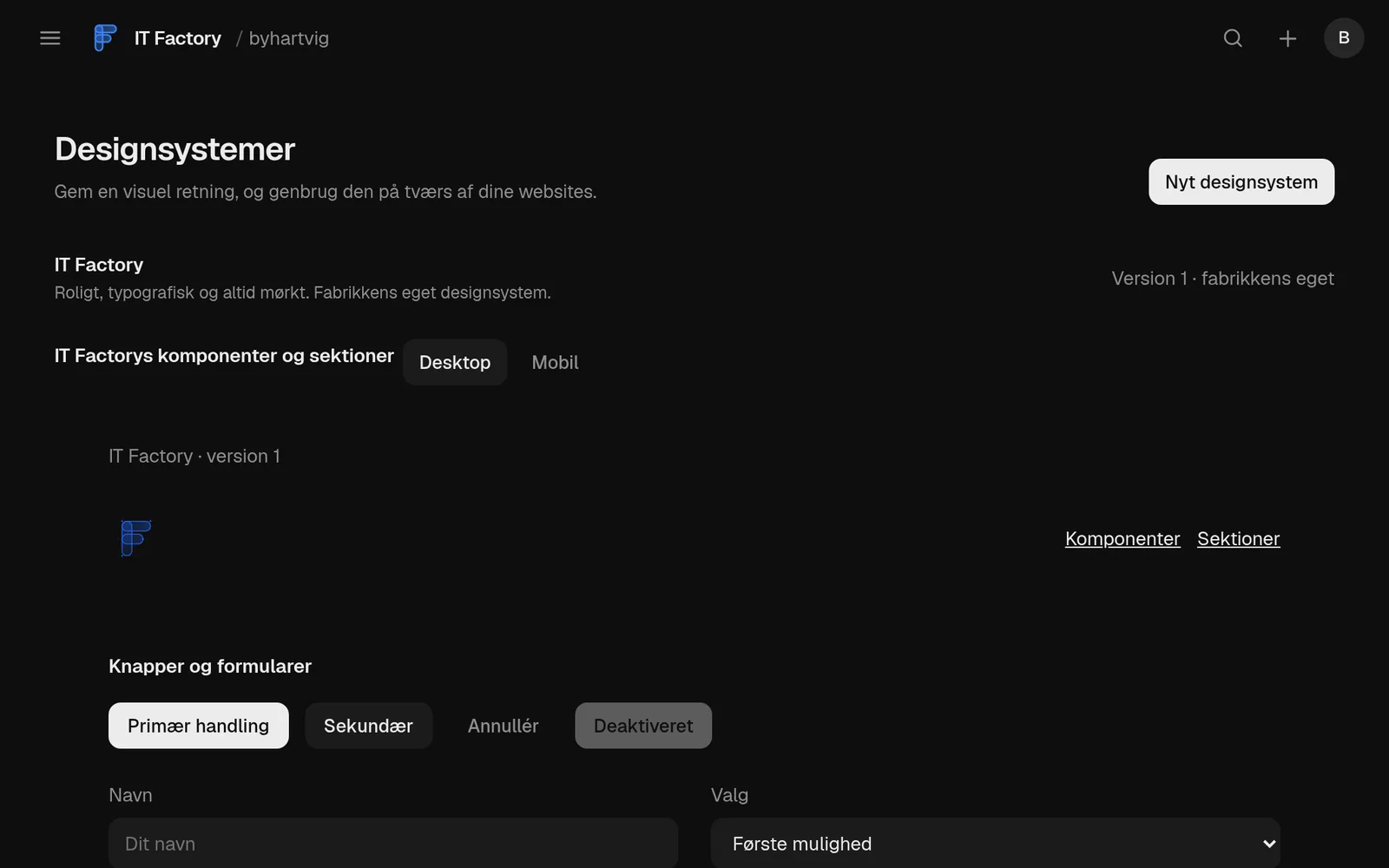
A visual direction can be saved as a versioned design system: colours, type, spacing, components and reusable sections. A new project starts from one. An existing site can move to a newer version through a preview of the exact file changes and a pull request, so nothing changes unseen.
Agents are users
Most of the code in my projects is written by AI agents, so IT Factory treats them as users. Every project gets its own MCP server and a document describing its stack and rules. Through it an agent can read the setup, list deployments, roll back, and look at errors and analytics. Keys are read-only unless I grant more, and they expire after 90 days.
On top of that runs a loop where agents pick up issues, a second agent reviews the work, and I approve from my phone with the commit, the diff, the test results and the reasons a change is risky in front of me.
Rune-Wiki is one of the projects that runs on it.